
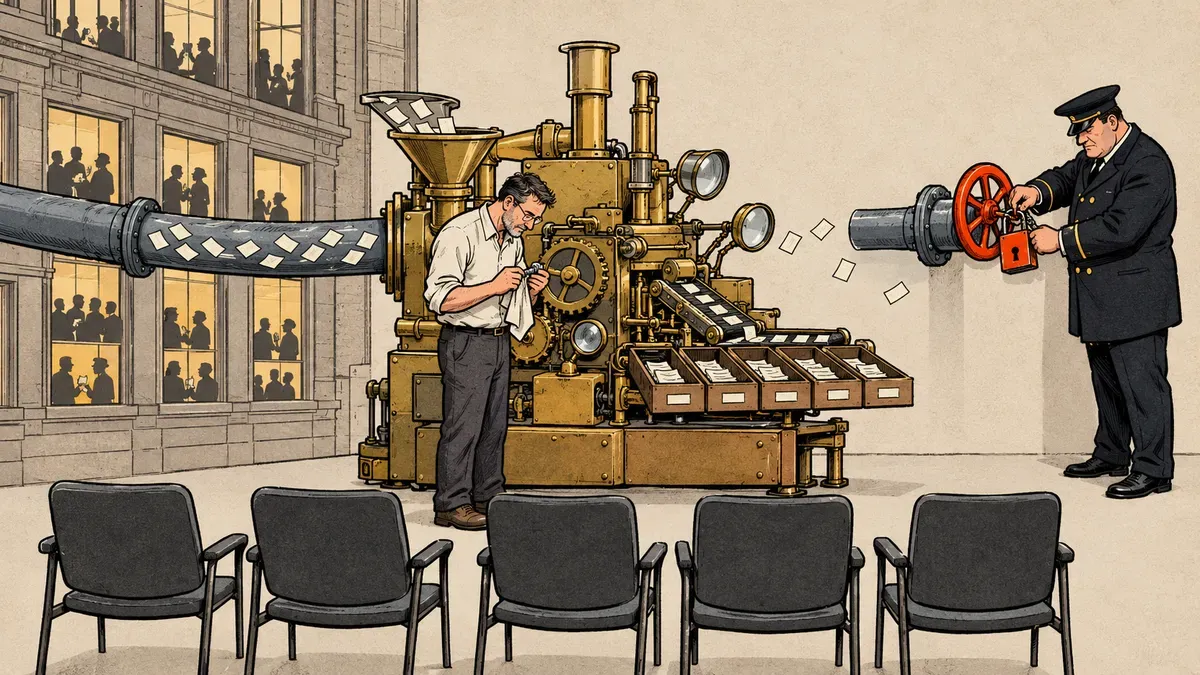
I didn’t know where to start validating business ideas so, being a builder, I spent months on a tool that used Reddit discussions to do it for me. It started as a concept and grew into a substantial project. I had set myself a limit past which I would stop, and in the meantime Reddit decided to close public access to its data, which was the door everything came through. This is an account of what worked, what didn’t, and what I learned.
Some of the links to the books mentioned in this article are affiliate links: the price is the same for whoever buys, and a small share comes to me.
What GoSolo was
I’ll start with the product, because without knowing what it did there’s no understanding why I shut it down.
GoSolo took a business idea and held it up against what people were writing on Reddit at that moment. It returned a report with the people talking about exactly the problem you wanted to solve (your first potential customers to reach out to), what users were saying about the products they already used, an outline for your first conversations, and a profile of the typical customer built on data rather than gut feeling. Every claim in the report linked back to the original discussion, so anyone could check it. The underlying idea, which I took from Arvid Kahl and his The Embedded Entrepreneur, was to look first for the reasons an idea doesn’t hold up and only then for the reasons it works: no reassuring reports, no polite compliments.
Similar tools existed, but they worked the other way round: they started from Reddit discussions to find problems worth building something for. GoSolo started from an idea you already had and gave you the data to confirm it, take it apart or adjust it. It’s a difference I never managed to get across clearly to the market.
Behind it there was a complete web application, with an AI that read and summarized the discussions (the technical details are at the end of the article). The landing page is still online at go-solo.app, but the service no longer works.
Why I started
I wanted something of my own, from the idea to the launch. I have almost always worked on parts of something bigger: important parts, but parts of a design that wasn’t mine. I wanted to prove to myself that I could carry a product on my own through its whole life cycle, because responsibility, attachment and quality are inevitably different when you’re part of a project and when you create one and keep it going.
The problem I wanted to answer is probably familiar to anyone who has read this far. Many people would like to start a business of their own, me among them, but where do you actually begin? There’s no checklist carved in stone: there are methods, conflicting opinions, books that say one thing and others that say the opposite. Whoever sets out doesn’t know where to set out from, and that is already a real problem before any product comes into it. And some never set out at all, paralyzed by the options, the doubts and the constraints.
Reddit looked like a gold mine to me: real people discussing ideas with no (or little) advertising filter, telling the stories of attempts that went badly and leaving insights that never make it into the polished success stories told after the fact. I wondered whether I could extract something useful from it for people just starting out, starting with myself.
GoSolo was born from that question.
One note to make sense of the rest: I wanted to build a company of one, a business run by a single person and able to grow, which is a realistic ambition. I find startups fascinating, but they’re a world of their own and not what I had in mind.
What went well
I’ll start here, because where I come from a closed project gets told like a sin to be hidden, and I can’t stand that.
GoSolo didn’t become a business, but it wasn’t wasted time and I don’t regret it.
I took a product from idea to launch, on my own, and it kept running until Reddit changed the rules for accessing its data.
As proof that I could handle the whole cycle, that box is ticked, and it’s no small thing.
The gain is what I learned, which is a great deal and doesn’t disappear with the project. Over these months I went from “I have an idea for a tool” to working knowledge of how to price a service for businesses in Italy, what GDPR asks of a subscription software product, how to write a service agreement, how to run conversations with potential customers (as a method, not a slogan), and how the Italian startup ecosystem is put together, accelerators and incubators included, with where the value is and where it isn’t. It would have been time lost only if I had walked away with nothing.
The most formative moment came in January. The first version of GoSolo was aimed at individual aspiring founders, with pay-what-you-want pricing to test their willingness to pay, and after two months of trials on Reddit I had understood that it worked badly. In January I did something I had never done before: I asked a professional outside my circle for a structured opinion. I wrote to the team at Startup Geeks, and Alessio Boceda replied to my first message.
I’ll admit it now, because anyone who has tried writing to someone outside their own network will recognize the feeling: I felt a mix of nerves and adrenaline I didn’t want to own up to. It was a professional email, short, nothing special, but the reply told me that someone outside my bubble, an authority in their niche, had read it and thought it worth answering. The first real reply reminds you that you’re a beginner. Not a bad thing, just the starting point.
That conversation led to Federico Mazzotta, and his feedback gave birth to the second version: a tool for preparing customer conversations, aimed at people starting a business for real, with the idea of offering it to accelerators for their startup cohorts as well. This time it followed a proven method, Steve Blank’s in The Startup Owner’s Manual, which the Startup Geeks program and their handbook, Il manuale dello startupper, are also built on: complete with the Javelin Board, a board where you write down the hypothesis, the experiment and the success criterion before trying anything, and the experiment log. It was the better product, both technically and in its positioning, because it came out of an outside conversation rather than a solitary hunch.
There was a small confirmation, too. In the month I spent trying to get known on X (more on that later), among my very few new followers was Arvid Kahl himself. I was starting from zero followers and in numbers it is literally nothing, but it meant a lot: it didn’t solve any problem, but it’s the kind of signal that keeps you going in the weeks when nothing seems to work.
What didn’t work in the project
To explain it I have to tell the story of the two changes of course, because without the story the problems sound abstract.
Between September and October 2025 I tested the first version on Reddit for two months, and the responses were ambiguous. People liked the report and the comments were positive, but two things didn’t add up. The people responding were other developers, saying “interesting, I’d like to build something similar” rather than “I want to buy it”. And the report, with its blunt final verdict (Build, Kill, Pivot), didn’t really help anyone understand what the next step was. I never got as far as defining the money model, meaning how and how much to charge, or proposing a price, but the competitor analysis showed that the market paid for tools of this kind, by now all alike, around 20 dollars for 3 analyses.
In January 2026 the opinion from Startup Geeks wasn’t “your model is weak”, but something more targeted and more uncomfortable. The first point was the audience. Without realizing it I was talking to aspiring founders who were almost all developers: through the language I used, the niches I searched in, and even the searches I ran with GoSolo, where I described the product’s features and not the problem it solved. The people who join Startup Geeks programs, on the other hand, are anything but just developers: the target, then, had changed altogether. The second point was the method, because the product didn’t follow a proven method for talking to customers. I had stitched together the approaches of several well-known founders, but they had started with a context (a network, previous experience, an audience) that I didn’t have. I had modeled myself on people who made it while ignoring where they started from: good old survivorship bias had caught me square on, contaminating the project from the design stage. Luckily these are subjects I know well; imagine if I hadn’t known them at all. But, as they say, easier said than done.
From January to April I stopped coding to rethink the positioning, and from April I built the second version. Then, once I ran the numbers, four problems came up.
The first is economic. Even in the best case, selling to companies, the work needed to maintain and grow the product was huge compared with the realistic return. I redid the numbers with optimistic assumptions and the result didn’t change: as a standalone business it didn’t hold up, unless I devoted myself to it entirely or grew a lot.
The second is Reddit. At first I saw the limits on data access as a technical problem, then I understood it was a legal and commercial one. Since 2023 Reddit has charged for access to its data, sued those who collected it for commercial use, and licensed it to Google and OpenAI in deals worth millions. A tool like GoSolo can live in the grey zone as long as it stays small, but it becomes a target the moment it gets noticed, and a business whose condition for survival is not growing too much is a contradiction, especially when the business model, without growth, didn’t hold up to begin with.
The third is the Italian market. The accelerators suited to a tool like this can be counted on one hand: once you’ve contacted them all the market is over, and there’s no second pool behind it.
The fourth concerns individual aspiring founders as a route to growth, and it’s a trap. There are many of them, they spend little when they spend at all, they don’t stay long, and they expose you publicly just when you start having something to lose. Above all, someone testing an idea isn’t a type of person but a phase that lasts a week or two. You don’t build a stable business on customers who exist as such for fourteen days. I called it the ghost niche. With the second version I had tried to stretch that window: the experiments would be run on the platform, and with accelerator cohorts the turnover would be low but steady. I never got as far as testing it.
One last observation completes the picture. Several of the competitors I analyzed, which I won’t name, are in my view selling comfort food, cheaply AI-generated text: reports dense with words and no real data underneath, watered-down market analyses, and feasibility scores always above 70%. 70% of what, and compared to what, I couldn’t say. GoSolo stood out because it started from real discussions, but that comparison taught me a bitter lesson: between a real meal at a high price and comfort food at a low one, the market, or rather the target I had loosely identified and defined at the start, always picks the second. Quality doesn’t turn into willingness to pay on its own, especially when the buyer hasn’t yet understood what they need. In theory I knew perfectly well what the typical customer was, the avatar as Alex Hormozi calls it: in practice mine had stayed vague.
Reflections
Self-reflection (or the After Action Report, as David Goggins calls it in Can’t Hurt Me) is a habit I haven’t fully built yet, perhaps because it’s the part that weighs on me most: not so much sharing it as admitting it to myself.
The first point is the tendency to build, with a nuance I want to bring into focus. The simple version is that you take refuge in code because it’s comfortable, but that isn’t all. When you build in a context you know, you know where you’re starting from and where you’re going: you have clear goals, immediate feedback and objective criteria for telling whether it works. When you do it in a field that isn’t yours, you grope in the dark from start to finish. At first it was pitch black; now I’m starting to make out the shapes, like someone who has been in the dark for a minute and can’t see well yet but begins to sense outlines. Without experience and without outside feedback I couldn’t tell whether I was doing well, badly, or just wasting time. Talking straight away with the people who have the problem serves exactly this purpose, because those contacts are the stakes that guide the work. Without stakes every action seems equally defensible, and you end up doing whatever comes most naturally, which for me is, precisely, building. It’s also true that if you’re just starting and you talk to the wrong people, you risk getting even more confused and doing worse.
When I started I didn’t know those stakes: “start with a waiting list” and “check demand before you build” weren’t part of my vocabulary. When I discovered them along the way, applying them after the fact seemed to cost more than it would return, because opening a waiting list, promoting it and finding out months later that the idea didn’t hold up would have burned what little credibility I had built. It was a seemingly rational decision, skewed by the context.
The second point is perfectionism. I produced detailed specifications, elaborate instructions for the AI, triage systems, an architecture that ran analyses in parallel and a search by meaning instead of by keyword, legal checks and privacy documents, automated tests and a carefully built infrastructure. I don’t regret it, because a solid product matters for credibility and as work to show. The problem is the dose. Perfectionism applied to design I still see as a very good direction, while applied to selling it becomes a brake, because there the next step no longer asks for more quality in work done alone but for the willingness to expose yourself to a no. To lots of noes, in fact. Knowing myself, the rule I’ve set is simple: perfect done becomes never done. That goes for this article too, which I’m publishing imperfect instead of chasing a version I would never write.
The concrete example is X, at the end of 2025. For a month I shared reflections and methods, writing a series of posts and replying many times to other people’s, and my followers grew by a number you can count on one hand. I was talking to the wrong audience, on a channel where I had neither a community nor the time to build one. I stopped early, and it was a clear-headed choice, but the pattern underneath remains: I had treated social media presence as a matter of volume, frequency and well-written posts, when first of all it was a matter of audience, which calls for other skills and timescales measured in months, not weeks.
The third point is having waited too long before getting my hands dirty with what lies outside my comfort zone: from market and competitor analysis to identifying potential avatars, from interface design to copy written to sell, from preparing scripts to reaching out to potential customers, all the way to managing my own introversion.
I could also beat myself up for not studying Reddit’s policies and rules carefully before starting, but that is exactly the kind of experience I needed to have.
The awareness that getting it wrong an unspecified number of times is a plus to pursue and not a minus, when done with judgment, is something that both fascinates and intimidates me, and I now see it a little more clearly.
Here I get to the heart of it: GoSolo was also built to help people starting a business recognize their own confirmation bias, the tendency to look only for the evidence that proves us right. The thing is, confirmation bias and survivorship bias inevitably go hand in hand, and at first I fell for it myself, because the only examples I had access to were those of people who had made it. Without examples of what doesn’t work and without the context of those who failed, recognizing the real patterns is a pipe dream. It can only be discussed honestly and with the full picture after living through it, because before that the very awareness of the problem is missing.
The decision
I had decided to close it on my own terms. The initial frustration had passed, and so had the burnout, and at some point the clarity arrives to look at the situation and your own context without kidding yourself.
To decide comes from the Latin dēcīdĕre (as if we didn’t know), which means to cut off: to say no to everything else in order to carry one thing forward. Closing GoSolo meant admitting what I hadn’t managed to rationalize before: that the work needed was enormous, that none of the alternative routes survived analysis, and that it wasn’t worth it. Freezing it indefinitely meant paying every month for a product standing still. Open-sourcing it made no sense, because the code has nothing protecting it from competition and nobody would pay to have it. Turning it into AI consulting for companies meant starting from scratch in a market where others have been working for years with an advantage I don’t have.
The plan was to leave it online for free until the AI credit ran out, and then shut it down in an orderly way. Reddit shortened the timeline. At the end of September 2026 it announced the gradual closure of public access to its data, which will end completely in March 2027: from then on the data can only be obtained through a commercial agreement with Reddit.1 In the meantime the service stopped working. I could have rewritten it to stay afloat for a few more months, but that would have been work spent on a product I had already decided to close, resting on ground that had just shown it could disappear.
Today go-solo.app shows only the landing page with a closure notice. The code and the lessons remain, and they hold up outside the context they were born in.
I didn’t lose seven months of work: I learned far more from GoSolo than I would have learned without it. But learning and running a business are two different things, and today I can tell them apart clearly.
What I take away
Four lessons, because if you’ve made it this far you deserve something concrete. I’ll spare you the “Follow your dreams”.
Appreciation is not a sale. A positive comment costs its writer nothing. If nobody has paid you yet you don’t have a business: you only know people like the idea, not that the product sells.
If another company can switch you off, the business isn’t really yours. GoSolo depended on a single data source I didn’t control. The day the owner of that source changed the rules, the product stopped, and there was nothing I could do.
Ghost niches exist, and you need to spot them early. If your customer exists as such for fourteen days, you don’t have a market, you have an audience that keeps turning over and that, unless you already have established authority, will hardly see you as a supplier.
Those who made it are not a representative sample. If you model your project on what the successful founders you see on social media do, you’re ignoring their starting point: the historical moment, the network, the experience, the charisma, the audience, the capital. Copying the method without the context leads to failure systematically, and you only notice once you’ve run out of the months and the money it takes to notice.
I’ll say it again: failures are personal experiences worth telling, all the more so when they’re measured. They aren’t mistakes to hide in shame: that perception comes from our ego, which Ryan Holiday in Ego is the Enemy calls, without mincing words, the enemy.
The things not to do when starting a business far outnumber the things to do, but they’re rarely talked about, because those who do them seldom stay standing long enough to tell the story, and are even less often willing to show their cards.
This article is my small contribution to that missing record.
Thanks, and what comes next
Three thank-yous, in order.
To the Reddit users who commented on the first version in the early months: scattered replies in threads I never went back to, which nonetheless shaped concrete decisions.
To Alessio Boceda, for the first reply that opened that conversation. It was an important push, and it showed me that the door exists and that you can knock.
To Federico Mazzotta and the Startup Geeks team, for the January opinion, which was among the most formative moments of the whole project and on its own was worth weeks of research.
As for what comes next, I won’t make any proclamations, but I’ll certainly keep getting things wrong with more curiosity, measuring the failures and writing about them along the way.
The technical details
This part is for people in the trade: everyone else can stop here without missing anything.
GoSolo was a complete web application, designed, written and put into production by me alone: a Python backend with FastAPI, a React and TypeScript frontend, an interface in Italian and English. Analyses took minutes, so they ran on an asynchronous job queue with Celery and Redis, and a long request didn’t block the rest of the service. The code followed Clean Architecture, with the domain logic separated from the database, the models and the data sources, and it was covered by about 400 automated tests.
Collecting the discussions started from the user’s idea, which a model rewrote into several searches, also choosing the relevant Reddit communities. Tavily and Serper searched for discussions in parallel, the results were merged and deduplicated, and the content was downloaded by a scraper I wrote that read the discussion pages as JSON. PRAW, the Python library for the Reddit API, stayed as a fallback when the scraper failed. It was a technical mitigation, not a solution to the legal problem, and in fact it wasn’t enough.
Then came the selection. Each discussion was turned into an embedding, a numerical representation of its meaning, stored in PostgreSQL with pgvector, and those too far from the idea were discarded by a similarity filter. The rest went through triage: a model read only the title and the first lines and decided which deserved the full analysis, which is the expensive part. This way the in-depth analysis only ran on what was genuinely relevant.
The analysis was split into steps, each with its own instructions: the problem, the customer segments, the competitors, the people to interview, the interview outline and the riskiest hypotheses. Every claim in the report stayed tied to the discussion it came from. The model provider was interchangeable (OpenAI, DeepSeek, or a local model with Ollama during development), and the cost of each step was recorded, model by model.
The second version added the Javelin Board: users designed experiments on the riskiest hypotheses, set the indicators and recorded the results. At the end the system proposed a verdict (explore, validate, change direction or close) that the user confirmed or corrected, and every step ended up in an event log.
The infrastructure on Render was described declaratively in a single file, the way you would with Docker Compose: database, API, worker and Redis. Locally everything ran with Docker Compose. The code stays in my archive.